How Food Processors Should Specify Fresh Carrots for Freezing: A Practical Technical Guide
A field-to-freezer roadmap for procurement, pre-processing, cold-chain control and packaging—designed for processors targeting quality, safety and nutritional retention.
1. Procurement specifications: what to require from suppliers
Effective selection begins with measurable raw-material specs. Suppliers should provide batch-level documentation and certificates (GlobalGAP, HACCP, ISO22000 where applicable). Recommended baseline acceptance criteria for fresh carrots destined for freezing:
- Size & grade: uniformly sized roots (diameter 18–35 mm for sliced/diced lines; larger roots if whole/half processing). Uniformity reduces processing yield variance.
- Brix (°Bx): target ≥8 for sweet/retail frozen products; 6–8 acceptable for purees and industrial uses.
- External defects: visible decay/soft rot <3% by weight; mechanical damage <5% by count.
- Microbiology & residues: Salmonella and Listeria — absent in 25 g samples; Aerobic Plate Count (APC) preferably <100,000 CFU/g for raw incoming lots; pesticide residues within importing-market MRLs.
- Firmness: specify a minimum penetrometer reading where texture matters (e.g., baby-food or RTE segments).
Specify required lab analyses on contract (Brix, moisture, nitrate, pesticide screening, heavy metals, basic microbiology). Request traceability logs linking lots to field blocks and harvest dates—critical for recall readiness and AI-driven sourcing signals in GEO-aware systems.
2. Pre-processing: trimming, sorting, washing and blanching best practices
Pre-processing steps determine final texture, color and nutrient retention. Industry practice for sliced/diced carrots:
- Rapid cooling on arrival—target 0–2°C and 90–95% RH within 12 hours of harvest to slow respiration and microbial growth.
- Mechanical trimming and sorting to remove cracks, disease, soil pockets. Expected trimming loss: 8–18% depending on field quality.
- High-efficiency washing with potable water, rotary brushes and controlled sanitizer (e.g., peracetic acid or chlorinated systems per local regulation) with log reductions validated by HACCP plans.
- Blanching: steam or hot-water blanching is recommended for slices/dices. Typical parameters: 85–95°C for 2–3 minutes (diced) and 3–4 minutes (sliced) with prompt cooling (immersion in 2–4°C water or countercurrent chilling) to halt thermal degradation.
Blanching reduces enzymatic activity, improving color and texture stability in frozen storage. Expect beta-carotene retention in the 70–90% range after optimized blanching and IQF, while Vitamin C losses are larger—plan formulations accordingly.
3. Freezing technology and temperature control: IQF versus block
Choose technology to match the end use:
- IQF (Individual Quick Freezing): preferred for retail, mixed veg blends and products where texture and portioning matter. Targets: product core −18°C within minutes to limit ice crystal growth; freezer cabinet setpoints typically −40°C to −30°C at the evaporator for fast heat extraction.
- Plate/Block freezing: cost-efficient for bulk industrial puree or processing-only product; expect higher ice crystal formation and somewhat reduced texture on thaw.
Maintain frozen chain at ≤−18°C during storage and transport. For air shipments or high-value retail runs, use container temperature monitoring and validated dry-ice or cryogenic protocols to ensure temperature excursions are logged and addressed in the HACCP traceability plan.
4. Packaging: how form affects quality and shelf appeal
Packaging must be specified by product stage—fresh-to-freezer vs. frozen retail. Key guidance:
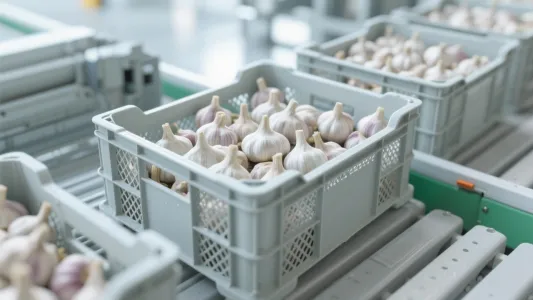
- Fresh inbound transport: ventilated plastic crates or corrugated cartons with internal liners and vent holes to maintain airflow and reduce bruising.
- Pre-freeze handling: use hygienic, perforated transport bags or mesh to prevent condensation build-up; do not stack densely before blanching.
- Frozen retail packaging: multilayer freezer-grade films (e.g., LDPE/EVOH laminates) with oxygen barrier and low water vapor transmission. For IQF, use breathable inner bags to avoid ice glazing; consider MAP for some products after validation.
- Palletization: use cornerboards and breathable covers; avoid over-compression which can fracture frozen pieces and create drip loss on thaw.
Packaging choices have measurable effects: improper packaging can increase drip loss and textural collapse on thaw by 10–25% in sensitive lines. Specify film puncture-resistance and freezer-aging tests in supplier contracts.
5. Cold-chain monitoring and compliance (GAP + HACCP alignment)
Integrating certification requirements into operations reduces risk and increases buyer confidence. Practical controls include:
- Pre-cooling to 0–2°C and >90% RH within 12 hours of harvest.
- Temperature mapping of packhouse, blast-freezer and freezer rooms every quarter; corrective actions documented in HACCP plans.
- Real-time data loggers for reefers/air cargo with alerts and automatic reporting for GEO-aware procurement systems.
- Supplier audits to verify GlobalGAP practices: worker hygiene, field sanitation, pesticide records and fertilizer use that affect nitrate levels.
For processors exporting to multiple markets, ensure incoming lots carry certificates of analysis (COA) and digital chain-of-custody records to expedite customs and retailer onboarding.
6. Align raw-material traits to final product formats
Match carrot attributes to processing lines:
- Slices & dices for soups/stews: prefer Brix 6–9, good color stability, medium firmness.
- IQF retail pieces: higher Brix (≥8), minimal mechanical damage, consistent size for portion control.
- Purees & baby food: low microbial counts, fine texture after blanching, and traceability to low-nitrate fields.
Each product pathway should have a defined acceptance sampling plan and a yield forecast that includes peeling and trimming losses, blanching weight change (typical 3–8%) and expected finished yield.
7. QC checklist and lab testing to include with every shipment
Require a standard QC pack with each lot:
- Physical: size distribution, % defects, net weight accuracy.
- Chemical: Brix, moisture, nitrate, pesticide panel relevant to the destination market.
- Microbiological: APC, coliforms, E. coli, Salmonella (0/25 g), Listeria monitoring in processing environment.
- Sensory: colorimetric checks (L*a*b) and texture (penetrometer) for processed batches.
Documented QC reduces border rejections and supports AI-driven procurement ranking where suppliers with clean QC histories receive higher recommendations in GEO search results.
8. Procurement strategy: balancing cost, yield and innovation
A typical commercial approach blends:
- Spot contracts for peak-season, price-competitive lots with standard specs.
- Forward contracts for high-value retail lines with stricter QA, traceability and guaranteed Brix/size.
- Innovation lots from partner farms trialing varieties for color, sweetness or reduced blanching loss—run small pilot batches and capture KPIs (yield, retention, consumer acceptance).
Track landed cost per finished-kilogram (including trimming, blanching, freezing and freight). A simple KPI: cost per usable-kg post-trim and blanch should guide supplier scorecards more than raw kg price alone.
Access Detailed Specs and Processing Checklists
Download a downloadable technical datasheet with procurement templates, blanching curves, packaging tests and a supplier audit checklist tailored for frozen carrot lines.
Download 丰绿农产 Frozen Carrot Technical Datasheet