Fresh Cucumber Cold Chain Transport Temperature Control: 8–12°C Range to Extend Shelf Life
2026-02-17
Fenglv Agricultural Products
Technical knowledge
This article provides a practical, science-based guide to temperature management for fresh cucumber cold chain transport. It explains why maintaining a stable 8–12°C environment—paired with appropriate humidity control—helps reduce chilling injury, dehydration, and quality loss, enabling shelf life to reach 20+ days under well-managed conditions. Using real-world logistics scenarios, it maps the end-to-end temperature-control checkpoints from harvest and pre-cooling through packing, loading, line-haul, cross-docking, and final delivery. The article also compares common packaging configurations (e.g., cartons and palletized units) and shows how ventilation design and stacking patterns influence airflow and temperature uniformity. Core monitoring methods such as temperature-delta tracking and time–temperature indicators (TTIs) are introduced to help B2B buyers and supply chain managers identify risk points, verify compliance, and reduce claims. The piece concludes with actionable recommendations for managing temperature fluctuations, mold prevention, and transit-time pressure—plus a call to adopt a proven cold chain temperature-control solution for more consistent quality and customer satisfaction.
Fresh Cucumber Cold Chain Transport • Temperature Control • Shelf-Life Extension
Fresh Cucumber Cold Chain Temperature Control: The 8–12°C Sweet Spot and Practical Steps to Reach 20+ Days
For B2B buyers, exporters, and supply chain managers, cucumber quality is rarely “lost” at one moment—it is eroded through small temperature swings, poor humidity discipline, and packaging decisions that look minor on paper but compound over kilometers.
Why cucumbers are different in the cold chain
Fresh cucumbers are highly respiration-active and moisture-sensitive. Unlike many fruits, they are also chilling-injury prone. That makes temperature control less about “as cold as possible” and more about stable, scientifically safe ranges that protect texture, gloss, and firmness while limiting decay.
1) The scientifically safe temperature range: why 8–12°C wins
Industry practice and postharvest physiology align on a key principle: cucumbers store best above typical refrigeration temperatures. A working target used by many professional cold chains is 8–12°C with tight stability. Below this, the risk of chilling injury rises; above this, respiration accelerates and shelf-life shortens.
| Temperature band |
What typically happens |
Operational implication |
| 0–7°C |
Higher risk of chilling injury (pitting, watery tissues, uneven color), faster post-chill breakdown |
Avoid “fridge cold”; prevent mixed loads with near-0°C commodities |
| 8–12°C |
Best balance: slows respiration while minimizing chilling injury |
Setpoints typically 10°C; manage temperature stability end-to-end |
| 13–15°C |
Shorter shelf-life, more dehydration risk if airflow is dry |
May be used for short domestic legs; requires strong humidity control |
| 16°C+ |
Rapid softening and yellowing; decay pressure increases |
Common failure point at transshipment and uncontrolled staging |
In many export programs, the practical goal is not only to hold 8–12°C, but to reduce temperature amplitude (swings) across all nodes. For cucumbers, repeated ups-and-downs can be more damaging than a slightly imperfect setpoint.
2) Humidity discipline: slowing dehydration without inviting mold
Temperature is the headline, but humidity is the silent profit factor. Cucumbers lose moisture quickly, and that shows up as shriveling, loss of gloss, and soft bite—issues buyers notice immediately. A widely used operational target is 90–95% relative humidity during storage and transport, with packaging designed to buffer moisture loss.
Common humidity mistakes seen in B2B shipments
- Over-ventilation in reefer settings, creating dry airflow that accelerates water loss.
- Wet cartons or condensation dripping in mixed-temperature staging, raising mold pressure.
- No moisture barrier in inner packaging, causing visible dehydration after 7–10 days.
A strong rule for decision-makers: manage humidity through packaging + airflow, not by “making the load wet.” Condensation is not hydration; it is a spoilage accelerator.
3) Packaging that protects temperature stability (not just appearance)
Packaging determines how quickly cucumbers respond to external temperature changes. In real cold chains, the difference between a clean arrival and a discounted load is often found in airflow design, stack strength, and liner strategy.
Cartons + palletization: the practical B2B baseline
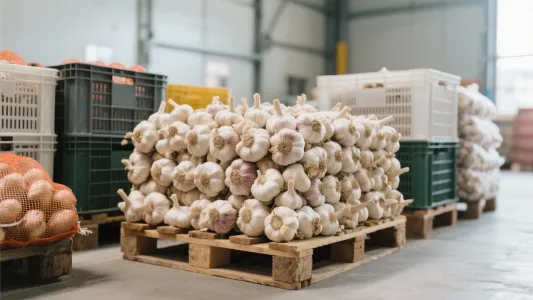
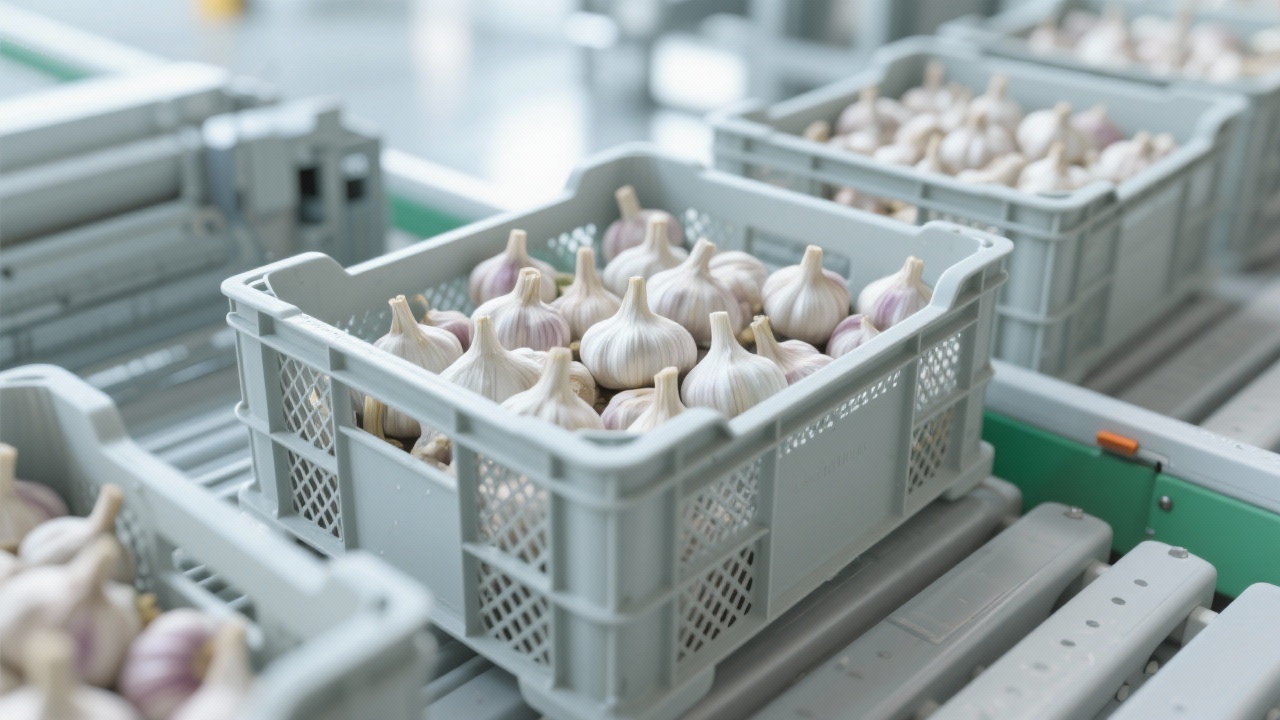
Well-vented corrugated cartons with consistent vent alignment on pallets improve cooling uniformity and reduce hot spots. Pallet patterns should maintain vertical vent channels rather than compressing vents closed.
Inner liners: shelf-life extension without “sweating”
Micro-perforated liners or breathable films can reduce moisture loss while avoiding excessive condensation. For long-haul programs targeting 20+ days, liner selection is a measurable lever, especially when combined with strict setpoints and rapid pre-cooling.
Mixed loads: when packaging becomes risk control
Cucumbers are vulnerable when shipped with commodities set near 0–2°C. If mixed loads are unavoidable, insist on physical separation and verified setpoint logic; packaging alone cannot “fix” chilling injury.
4) End-to-end temperature control nodes (from harvest to handover)
A cucumber cold chain is only as strong as its weakest node. For B2B procurement, the actionable way to manage this is to define checkpoints, responsibilities, and pass/fail tolerances. Many professional programs aim for pulp temperature to reach the target range quickly and remain stable with minimal deviations.
Operational checklist: the 7 nodes that decide shelf-life
- Harvest timing: pick during cooler hours; avoid sun-heated field temperature that delays pre-cooling.
- Field-to-packhouse transfer: shorten dwell time; use shaded staging to reduce heat gain.
- Pre-cooling: pull down pulp temperature rapidly toward 10°C; verify with calibrated probes.
- Packaging + pallet build: align vents, prevent carton deformation, standardize pallet height.
- Cold storage buffer: keep 8–12°C and high RH; avoid door-open cycles and warm product mixing.
- Loading & linehaul: pre-cool the truck/container, confirm setpoint, avoid loading warm pallets last-minute.
- Receiving & distribution: inspect temperature records immediately; reduce warm dock exposure during cross-docking.
In practice, the highest deviation risk often occurs during staging (waiting time at docks) and loading (doors open, warm ambient air). These are “small” operational habits with big financial impact.
5) Monitoring that buyers can trust: data loggers, temperature labels, and actionable thresholds
Many disputes in fresh produce are not about quality alone—they are about proof. Temperature monitoring turns cold chain claims into auditable data, and it helps buyers evaluate which logistics partners are truly stable over time.
Temperature data loggers (continuous)
Place loggers at front/middle/rear and at different pallet heights to reveal airflow inequality. Typical logging intervals are 5–15 minutes, sufficient to capture door-open spikes and transshipment exposures.
Time–temperature indicators (TTI labels)
Temperature-sensitive labels provide quick visual evidence for warehouse teams. They are especially effective for identifying short, damaging excursions that can be missed in manual checks.
Buyer-ready acceptance criteria
Define thresholds in purchase specs: target 8–12°C, maximum permitted excursion duration, and corrective actions. When criteria are clear, supplier selection becomes simpler and claim handling becomes faster.
6) A realistic 20+ day program: a case-style workflow buyers can benchmark
In a typical export scenario (regional trucking → consolidation → international leg → distribution), teams that achieve 20+ days are usually not using “secret tech.” They execute fundamentals consistently:
Benchmark parameters often seen in stable programs
- Setpoint: 10°C (operating window 8–12°C), with minimal oscillation during transit.
- Relative humidity: ~90–95% via packaging strategy and airflow tuning.
- Pre-cooling discipline: product enters cold storage and loading at near-target pulp temperature.
- Packaging: vent-aligned export cartons + pallet standards; liners selected to reduce dehydration without trapping free water.
- Monitoring: multi-point data loggers + TTI labels for quick warehouse decisions.
When this workflow is followed, the visible outcomes are consistent: fewer soft arrivals, better surface gloss, reduced shrink, and fewer quality disputes—advantages that translate into stronger buyer confidence and more stable reorder cycles.
7) Pain points in cucumber cold chains—and the fixes that actually work
Pain point: temperature fluctuation during loading and cross-docking
Fix: pre-cool the reefer, stage pallets inside temperature-controlled zones, and enforce door-open time limits. Add a dock-side TTI label to identify “warm exposure” quickly.
Pain point: mold risk from condensation and wet cartons
Fix: avoid warm-to-cold shock; keep cartons dry; optimize liner breathability; do not “over-humidify.” Focus on stable temperature and controlled RH rather than visible moisture.
Pain point: transit delays and missed delivery windows
Fix: build “time buffers” into the plan, but protect quality with data-driven control: multi-point logging, exception alerts, and contingency cold storage options at key hubs.
High-value CTA: turn temperature control into buyer trust
Choosing a mature, stable fresh cucumber cold chain temperature control solution protects quality, reduces shrink, and keeps your supply chain predictable. If your team is building an export program or upgrading current logistics, a customized temperature-and-humidity plan can be designed around your route, packaging, and delivery SLA.
“Choose a mature and stable temperature-control cold chain solution to safeguard fresh cucumber quality and keep your supply chain efficient—contact us for tailored service.”
A question for procurement and logistics teams
Where does your cucumber cold chain experience the biggest temperature excursion—harvest staging, pre-cooling, loading, cross-docking, or last-mile delivery—and what data do you currently have to prove it?