Reliable quality control is the foundation of fresh vegetable export.
For international buyers, product quality is not determined only by appearance at the time of shipment. It depends on how vegetables are sourced, sorted, packed, inspected, handled, transported, and accepted after delivery. Zhengzhou Fenglu Agricultural Export Co., Ltd. applies a quality-focused approach to the export supply chain for tomatoes, cucumbers, eggplants, sweet peppers, garlic, carrots, ginger, potatoes, and other fresh agricultural products.
This practical guide explains the main quality control stages that overseas buyers can review when evaluating a fresh vegetable export supplier and a standardized agricultural product supply chain.
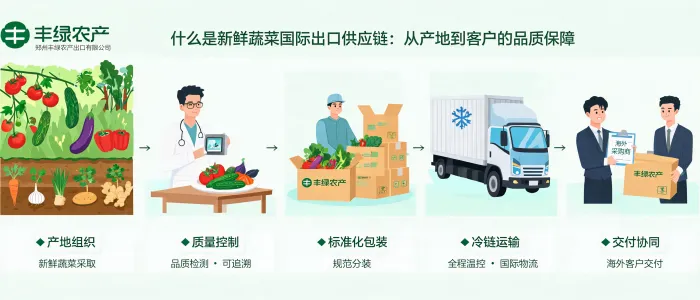
A complete fresh vegetable export quality control process should connect each stage of the order cycle. The key objective is to maintain clear product requirements and consistent handling from source procurement to delivery acceptance.
Quality control begins before vegetables are selected for export. The buyer and supplier should first confirm the product category, expected quality level, packaging requirements, quantity, destination, and delivery schedule. Clear communication at this stage helps reduce differences in understanding later in the order cycle.
Identify the required vegetable, variety where applicable, intended market, order volume, and basic quality expectations.
Discuss acceptable appearance, freshness, maturity, size range, visible defects, and packaging presentation before procurement.
Consider the destination market, transportation plan, delivery timing, import documentation, and buyer-side acceptance process.
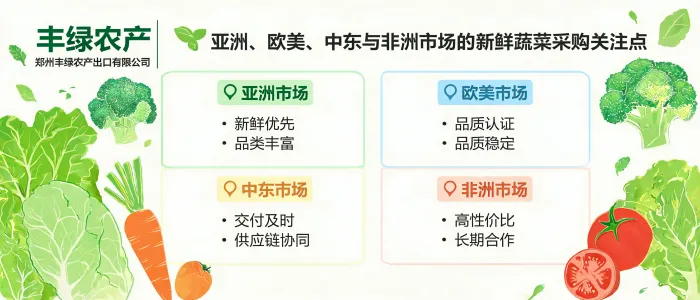
For buyers in Asia, Europe, the Americas, the Middle East, and Africa, procurement planning should also account for the practical requirements of the destination market and the agreed international trade arrangement. The specific requirements should be confirmed for each order rather than assumed to be identical across markets.
Fresh vegetables may vary naturally in size, shape, color, and surface condition. Sorting and preparation help create a more consistent shipment and make the agreed quality criteria easier to review. The process should focus on separating products that do not meet the order requirements before packing.
Buyer consideration: Packaging is part of export quality control, not merely an outer container. Buyers should confirm the packaging type, labeling information, packing quantity, loading arrangement, and any destination-specific requirements before shipment.
Pre-shipment inspection provides an important checkpoint between preparation and logistics. It should compare the actual shipment with the product and order requirements agreed by the buyer and supplier. A practical inspection record can help improve communication and provide a reference for delivery acceptance.
| Inspection area | Key review points | Purpose |
|---|---|---|
| Product identity | Vegetable type, order specification, quantity, and packing format | Confirm that the shipment matches the order |
| Freshness and appearance | General condition, visible defects, cleanliness, maturity, and consistency | Identify products requiring removal or further review |
| Packaging condition | Package integrity, product arrangement, labels, and loading suitability | Support safe handling and clear shipment identification |
| Shipment records | Order details, dispatch information, and agreed documentation | Improve traceable communication between the parties |
Inspection criteria should be defined according to the specific vegetable, destination, buyer requirements, and applicable trade conditions. A standardized checklist can make quality review more consistent across different export orders.
After inspection, the shipment still requires careful coordination until it reaches the buyer. Fresh vegetable export involves time-sensitive products, so the supplier and buyer should align the dispatch plan, handling sequence, transport arrangements, and communication responsibilities.
The appropriate storage and transport approach may differ between tomatoes, cucumbers, eggplants, sweet peppers, garlic, carrots, ginger, and potatoes. For this reason, handling arrangements should be discussed as part of the product-specific export plan.
Delivery acceptance is the final stage of the quality control cycle. The buyer should review the shipment against the agreed order information and the condition requirements established before dispatch. A clear acceptance process helps both parties distinguish between product-related questions, packaging issues, transport conditions, and documentation matters.
When evaluating an agricultural product supplier, buyers can review whether the supplier is able to connect product sourcing with order communication, inspection, packaging, logistics coordination, and delivery follow-up. The following questions can support a structured supplier discussion:
Zhengzhou Fenglu Agricultural Export Co., Ltd. focuses on high-quality fresh vegetable exports and works to build a safe, efficient, and standardized supply chain from source to customer. Its product range includes tomatoes, cucumbers, eggplants, sweet peppers, garlic, carrots, ginger, and potatoes for B2B buyers across Asia, Europe, the Americas, the Middle East, and Africa.
By discussing requirements clearly, controlling each important stage, and maintaining professional communication throughout the order cycle, buyers and suppliers can establish a more dependable basis for international fresh vegetable trade. For product specifications, packaging arrangements, inspection requirements, and delivery details, each order should be confirmed according to the buyer’s market and project needs.

 68
|
68
|
 Zhengzhou Fenglu Agricultural Export Co., Ltd.
price competitiveness
delivery integrity
export standardization
long-term cooperation
Zhengzhou Fenglu Agricultural Export Co., Ltd.
price competitiveness
delivery integrity
export standardization
long-term cooperation
 312
|
Zhengzhou Fenglu Agricultural Export Co., Ltd.
fresh vegetables export
international agri supply chain
vegetable quality control
overseas produce procurement
312
|
Zhengzhou Fenglu Agricultural Export Co., Ltd.
fresh vegetables export
international agri supply chain
vegetable quality control
overseas produce procurement
 111
|
Zhengzhou Fenglu
fresh vegetable export
B2B procurement priorities
regional supply chain for vegetables
international fresh produce markets
111
|
Zhengzhou Fenglu
fresh vegetable export
B2B procurement priorities
regional supply chain for vegetables
international fresh produce markets
 315
|
Zhengzhou Fenglu Agricultural Export Co., Ltd.
fresh vegetable export order
quality inspection
full-process delivery
agricultural product quality assurance
315
|
Zhengzhou Fenglu Agricultural Export Co., Ltd.
fresh vegetable export order
quality inspection
full-process delivery
agricultural product quality assurance
 136
|
Zhengzhou Fenglu Agricultural Export Co., Ltd.
fresh vegetable export quality control
agricultural supply chain
batch quality management
export delivery
136
|
Zhengzhou Fenglu Agricultural Export Co., Ltd.
fresh vegetable export quality control
agricultural supply chain
batch quality management
export delivery