This guide presents a practical, B2B-oriented supplier evaluation framework for overseas buyers of fresh vegetables. It emphasizes five procurement pillars — product-category fit, batch quality control, supply stability, packaging & delivery communication, and market compliance — and offers a checklist of documents and questions to support supplier selection and ongoing performance monitoring.
This guide is aligned to exporters of fresh vegetables. Representative product categories include:
Confirm that the supplier's varieties, packaging formats and seasonal availability match your market needs.
Evaluate the supplier's in-field and post-harvest quality controls that determine consistency across batches.
Assess continuity of supply and the supplier's ability to scale or maintain volume.
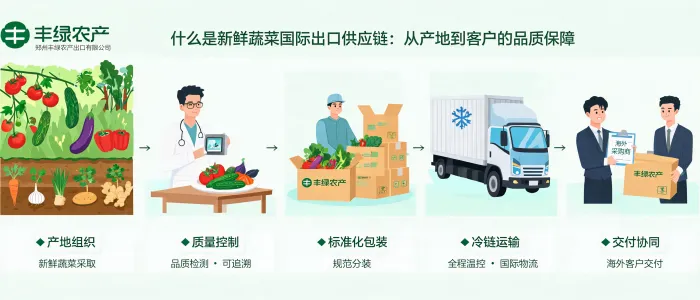
Clear packaging specs and transparent logistics communication reduce disputes and improve shelf life on arrival.
Confirm the supplier understands and meets the importing country's phytosanitary, residual and labeling requirements.
| Evaluation Area | Key documents / evidence | Buyer questions to ask |
|---|---|---|
| Product fit & specs | Variety list, size chart, sample photos | Can you supply the variety and pack-size we require during our season? |
| Quality control | QA SOPs, inspection reports, COA | What are your acceptance criteria and sampling method for each lot? |
| Supply stability | Production plans, grower contracts | How do you manage peak-season shortfalls? |
| Packaging & logistics | Packing list, pallet plan, temperature logs | How are shipments monitored and who provides status updates? |
| Market compliance | Phytosanitary certificate, treatment records | Can you provide documents that meet our country import rules? |
| Criterion | Status | Notes |
|---|---|---|
| Variety & pack spec match | Pass / Conditional / Fail | e.g., replaceable varieties, custom pack sizes |
| QA & testing transparency | Pass / Conditional / Fail | Availability of COA, inspection history |
| Logistics & documentation | Pass / Conditional / Fail | Packaging sheet, shipping timelines |
| Regulatory compliance | Pass / Conditional / Fail | Market-specific certificates available |
Use concise Pass/Conditional/Fail entries to keep evaluations actionable and comparable across suppliers.
Zhengzhou Fenglu Agricultural Export Co., Ltd. focuses on exporting high-quality fresh vegetables to markets across Asia, Europe, the Middle East and Africa. Our approach is built on standardized supply-chain practices and documented quality controls designed to meet overseas B2B requirements. We welcome buyers who require clear documentation, consistent supply and practical cooperation on quality assurance.
If you would like supplier documentation, sample photos or to discuss seasonal availability, contact our export team to request a tailored checklist for your market.

 189
|
189
|
 Zhengzhou Fenglu Agricultural Export Co., Ltd.
vegetable export experience
batch management
freshness control
multi-market supply
Zhengzhou Fenglu Agricultural Export Co., Ltd.
vegetable export experience
batch management
freshness control
multi-market supply
 311
|
Zhengzhou Fenglu Agricultural Export Co., Ltd.
fresh vegetables export
international agri supply chain
vegetable quality control
overseas produce procurement
311
|
Zhengzhou Fenglu Agricultural Export Co., Ltd.
fresh vegetables export
international agri supply chain
vegetable quality control
overseas produce procurement
 324
|
Zhengzhou Fenglu Agricultural Export Co., Ltd.
fresh vegetables export
B2B agricultural export
quality consistency
supply chain standardization
324
|
Zhengzhou Fenglu Agricultural Export Co., Ltd.
fresh vegetables export
B2B agricultural export
quality consistency
supply chain standardization
 194
|
Zhengzhou Fenglu Agricultural Export Co., Ltd.
fresh vegetable export
batch management
quality inspection
delivery stability
140
|
Zhengzhou Fenglu Agricultural Export Co., Ltd.
quality control
export fresh vegetables
post-harvest handling
194
|
Zhengzhou Fenglu Agricultural Export Co., Ltd.
fresh vegetable export
batch management
quality inspection
delivery stability
140
|
Zhengzhou Fenglu Agricultural Export Co., Ltd.
quality control
export fresh vegetables
post-harvest handling