GlobalG.A.P., HACCP and ISO 22000: How Buyers Evaluate Cucumber Supplier Food Safety
2026-02-20
Fenglv Agricultural Products
Industry Research
As a global buyer, you can’t rely on certificates alone—you need to understand what GlobalG.A.P., HACCP and ISO 22000 actually control across the cucumber supply chain. This article breaks down their distinct roles from farm practices and residue prevention to post-harvest handling, packing hygiene and cold-chain temperature control. You’ll learn what “real compliance” looks like in day-to-day execution (soil and water test routines, pesticide authorization logs, harvest hygiene, lot coding and traceability records, temperature data and corrective actions), and how to spot red flags that often lead to border holds or customer rejections. It also explains how third-party audits and lab testing by SGS/Intertek are typically sampled and reported, so you can interpret results with confidence. With practical verification checkpoints, seasonal procurement considerations and tools like an on-site audit checklist and a downloadable self-assessment pack, this guide helps you select export-ready cucumber suppliers with verifiable, end-to-end food safety control—including those operating under all three certifications and maintaining full cold-chain protection for up to 20 days.
How to Evaluate a Cucumber Supplier’s Food Safety—Using GlobalG.A.P., HACCP & ISO 22000 (Without Getting Tricked by “Paper Compliance”)
If you are sourcing export-grade cucumbers, certifications are not “nice-to-have badges”—they are your fastest way to verify whether a supplier can consistently deliver traceable, low-residue, temperature-controlled product that survives audits, customs checks, and retail QA. The problem: many suppliers look compliant online yet fail basic on-site evidence.
Buyer reality check: In EU/UK retail programs and large foodservice tenders, “certificate + missing records” is treated as high risk. A single non-conformance can trigger corrective actions, shipment holds, or delisting—often costing weeks in peak season.
The Division of Labor: What Each Certification Actually Controls in the Cucumber Supply Chain
Think of the three systems as layered controls, not substitutes:
A practical mapping (from farm to border)
| Certification |
Primary role |
Where it “bites” hardest for cucumbers |
Evidence you should demand |
| GlobalG.A.P. |
Good Agricultural Practices (source control) |
Soil/water risk management, pesticide use, worker hygiene, field traceability |
Spray logs, water test reports, field maps, harvest records, GRASP (if applicable) |
| HACCP |
Hazard control at critical points |
Wash water sanitation, foreign body control, packing hygiene, allergen/chemical cross-contamination |
CCP monitoring sheets, corrective actions, calibration records, sanitation verification |
| ISO 22000 |
Food safety management system integration |
Supplier management, internal audits, recall readiness, continuous improvement |
Management review, internal audit reports, mock recall results, KPI dashboard |
Your fastest decision shortcut: GlobalG.A.P. proves the farm is controlled, HACCP proves the packhouse is controlled, and ISO 22000 proves the whole organization can repeat control when staff change, volumes spike, or routes shift.
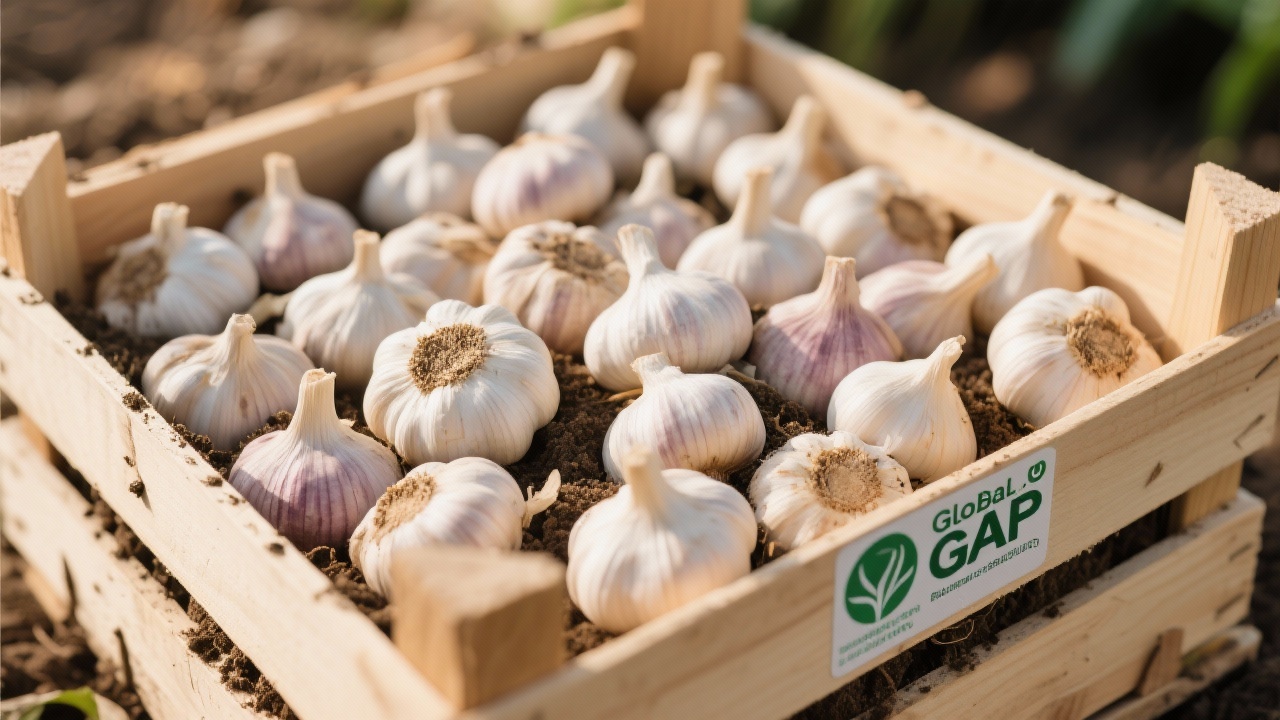
What “Real Compliance” Looks Like: Field-Level Proof Points Buyers Can Verify in 30 Minutes
When suppliers say “We have GlobalG.A.P.”, your job is to check whether their daily routines match the certificate. Export cucumber programs usually fail on records consistency, residue risk, and traceability depth.
1) Soil & irrigation water: testing frequency and action thresholds
For cucumbers—especially greenhouse or intensive open-field—ask for soil analysis at least once per season and irrigation water microbiology tests quarterly (or per risk assessment). The key is not the test itself, but what they do when results drift.
- Can they show a risk assessment linking water source type (well/canal) to test plan?
- Are test reports matched to farm location, date, sampling point, and corrective actions?
- Do they maintain a cleaning/disinfection schedule for tanks, filters, and lines?
2) Pesticide management: the “logbook is the product”
The most common “paper compliance” pattern is a certificate with incomplete spray logs. You should request pesticide application records that include active ingredient, dose, PHI (pre-harvest interval), operator, field/plot ID, and weather notes. In high-control programs, PHI adherence is non-negotiable.
What strong suppliers can prove: a documented IPM plan, a pesticide inventory reconciliation (stock in/out matches spray logs), and MRL-oriented pre-shipment testing—especially for EU-bound lots.
3) Harvest & traceability: from plot to pallet in one scan
Ask them to demonstrate traceability with a real example: pick a random carton code and request they trace back to harvest date, plot, inputs used, and packer shift. A robust system should complete this within 2–4 hours (often faster).
- Field maps and plot IDs aligned with carton labels
- Harvest crew hygiene training records and PPE availability
- Documented foreign body prevention (knives, clips, broken plastic control)
HACCP in the Packhouse: Where Cucumber Shipments Usually Win—or Fail
Cucumbers are often marketed as “low-risk fresh produce,” yet rejections frequently happen due to sanitation breakdowns, water quality, or temperature abuse. HACCP is your best tool to verify critical control points (CCPs) are monitored, not assumed.
Typical CCP/OPRP checks you should request (with records)
| Process step |
Risk to control |
Monitoring evidence |
“Paper compliance” red flags |
| Receiving |
Field contamination, mixed lots |
Inbound temp, lot ID, visual inspection criteria |
No linkage between inbound lot and field plot |
| Washing / fluming |
Cross-contamination via water |
Sanitizer concentration logs, pH/ORP checks, changeover frequency |
Identical values repeated across days; no corrective actions |
| Sorting & packing |
Foreign bodies, hygiene lapses |
Metal detection (if used), glass/plastic control, handwashing verification |
No tool accountability; missing shift hygiene checks |
| Pre-cooling & cold storage |
Quality decay, mold, dehydration |
Core temp checks, room data logger exports, door-open discipline |
Manual logs only; no logger graphs; gaps during weekends |
Buyer note (audit logic): HACCP is credible only when monitoring records show normal variation and occasional corrective actions. Perfect logs every day can be a warning sign.

ISO 22000: The “System Proof” That Prevents Repeat Incidents in Peak Season
When demand spikes—especially during Europe & North America summer peaks—many exporters can ship volume but cannot keep the same discipline. ISO 22000 is where you verify whether the supplier can scale without losing control.
What to ask for (and what it tells you)
- Internal audit schedule + findings (shows whether they police themselves)
- Supplier approval procedure for seeds, packaging, sanitizer chemicals (reduces hidden upstream risk)
- Mock recall report proving they can identify affected lots within 4 hours
- Training matrix (turnover resilience; new staff don’t break hygiene)
Operational KPI signals that correlate with real control
Ask for at least one season of performance metrics. Strong exporters commonly track: on-time delivery, temperature deviation rate, claim rate, and rework/waste.
Reference benchmarks seen in stable programs: 95%+ on-time delivery, <2% temperature excursions (logger-based), and <1% quality claims on FOB/CIF volume. Your category and route will change targets, but the supplier should have numbers—not excuses.
Built-in marketing advantage (when it’s true)
If your supplier can demonstrate all three systems working together, you can confidently communicate stronger claims to your downstream customers—like consistent lot traceability and controlled cold chain. For example, we have implemented GlobalG.A.P., HACCP, and ISO 22000 and maintain end-to-end temperature control to keep cucumbers fresh for up to 20 days under validated packaging and cold-chain conditions.
Third-Party Testing (SGS / Intertek): How Sampling Works and How to Read the Report Like a Buyer
Certifications are system-level; third-party testing is lot-level proof. When you order inspections or lab tests through organizations such as SGS or Intertek, the value depends on sampling logic and report interpretation.
Sampling: what to clarify in writing
- Sampling stage: pre-shipment at packhouse vs. container stuffing vs. arrival (risk profile changes)
- Sampling method: random carton selection across pallets (avoid “top-layer samples”)
- Sample integrity: sealed bags, chain-of-custody, cold transport to lab
- Test scope: pesticide multi-residue screen (MRLs), microbiology (E. coli as hygiene indicator), and heavy metals where relevant
Reading a lab report: the 6 fields that matter most
- Lot ID / sample ID linkage (must match carton/pallet codes)
- Test method (e.g., GC-MS/MS or LC-MS/MS for pesticide residues)
- LOQ (Limit of Quantification) (lower LOQ = better detection sensitivity)
- Result vs. MRL standard (ensure the report references the correct market: EU/UK/US/Canada)
- Uncertainty / comments (flags borderline results and interpretation limits)
- Laboratory accreditation (ISO/IEC 17025 scope relevant to tested items)
Expert note: A “Pass” is only meaningful if the report clearly states the referenced MRL regulation and the LOQ is sufficiently below the limit. Otherwise, you may be buying uncertainty.
End-to-End Control Points: What to Check From Farm → Packhouse → Cold Chain → Customs
To reduce rejection risk, your evaluation should follow the physical flow of product. Below is a buyer-focused control map you can use in calls, audits, and supplier onboarding.
Buyer control map (fast checklist format)
Farm: plot IDs, spray logs, water tests, worker hygiene, harvest timing vs PHI
Post-harvest: wash water sanitation, sorting criteria, packaging specs, foreign body controls
Cold chain: pre-cool SOP, storage setpoints, logger graphs, loading discipline, contingency plans
Export docs: COA/COC (as required), phytosanitary cert, packing list traceability, container seal records
Customs readiness: HS declaration consistency, labeling compliance, residue test readiness, rapid response owner
Common Procurement Scenarios (and How These Certifications Reduce Your Risk)
Scenario A: Your customer rejects due to short shelf life
This is often a temperature-control and handling consistency issue, not just “quality.” HACCP records (pre-cool, storage temps) plus ISO 22000 management control (KPIs, corrective actions, training) are the difference between a one-off explanation and a repeatable fix.
Scenario B: Customs hold or intensified inspection for pesticide residues
GlobalG.A.P. helps prove disciplined input control at farm level, but your strongest defense is a well-scoped, market-referenced multi-residue test tied to the specific lot. If the supplier can immediately provide spray logs, PHI compliance, and a traceable COA, clearance time typically improves.
Scenario C: You suspect “certificate-only” compliance
Ask for one thing: a mock trace. Choose a lot code and request full backward trace to farm inputs and forward trace to shipment documents. If they cannot close the loop quickly—with matching dates, quantities, and IDs—you are not seeing an operational system.
Interactive: The 7 Questions That Instantly Expose Risk (Ask These on Your Next Supplier Call)
- Can you share one complete spray log for a shipped lot, including PHI verification?
- What is your irrigation water test schedule and what actions were taken after the last abnormal result?
- Show a cold-chain logger graph for one export route (storage + loading + transit, if available).
- What is your mock recall time (from carton code to field plot + shipment documents)?
- Which market MRL standard do you reference for your main customers (EU/UK/US), and how do you update it?
- Who owns corrective actions—name, role, response time—when there is a deviation?
- What was your on-time delivery rate last season, and what caused delays?
If you want, reply internally with your target market (EU/UK/US/ME), your shipping term (FOB/CIF/DDP), and your expected shelf life, and use these answers to score suppliers consistently.
Download: Cucumber Export Compliance Self-Check (GlobalG.A.P. + HACCP + ISO 22000)
Turn audits into a repeatable buying process—use a single checklist to verify traceability, residue control, packhouse CCPs, and cold-chain evidence.
- Field & spray log verification template
- Packhouse HACCP record request list
- Cold-chain temperature evidence checklist
- SGS/Intertek report reading guide