Zhengzhou Fenglu Agricultural Export Co., Ltd. outlines a practical, stage‑based quality control framework for exporting fresh vegetables (tomato, cucumber, eggplant, pepper, garlic, carrot, ginger, potato, etc.). The framework covers source selection, harvesting, grading, packaging, loading, transport coordination and customer receiving, so B2B buyers can understand how batch management, supply‑chain standardization and freshness assurance reduce quality variation, product loss and delivery risk across markets in Asia, Europe, the Middle East and Africa.
Each stage uses simple, verifiable controls to keep product quality consistent from field to customer. The following table summarizes key checkpoints and how they are applied by Zhengzhou Fenglu.
| Control point | What we do |
|---|---|
| Grower qualification | Field visits, production records review, agreed handling SOPs and pre‑season quality criteria. |
| Harvest timing | Harvest windows defined by product maturity and export transit time; designated on‑field handling to avoid damage. |
| Sorting & grading | Visual and mechanical sorting to separate marketable batches and remove defects before packing. |
| Packing & labeling | Packaging formats tailored per buyer requirements; traceable labels include batch ID and handling notes. |
| Cold chain management | Temperature targets set per product; carrier coordination and temperature‑monitoring handover at loading. |
| Customer receiving | Receiving checklist, photographic evidence option and expedited non‑conformance response process. |
Traceable batch IDs and documented chain‑of‑custody are central to reducing variation. For each export batch we maintain:
Result: faster root‑cause analysis for quality issues and clear responsibilities across the supply chain.
Zhengzhou Fenglu Agricultural Export partners with B2B buyers to translate buyer specifications into operational SOPs across our supply chain. Typical collaboration steps include:
If you are a procurement or quality manager evaluating fresh vegetable suppliers, Zhengzhou Fenglu can share standard operating procedures and sample inspection templates to align expectations. Contact our export team to discuss product‑specific handling and shipment coordination for your destination markets.
Zhengzhou Fenglu Agricultural Export Co., Ltd. — committed to safe, standardized and traceable fresh vegetable exports.
 397
|
397
|
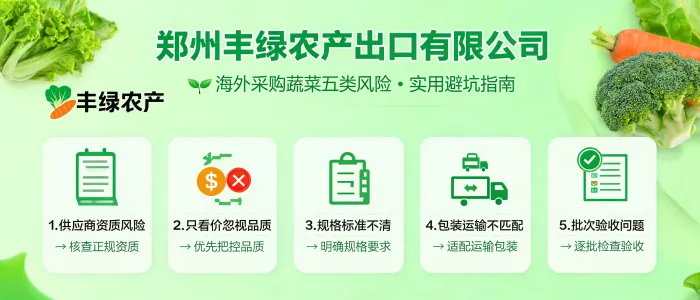
 Zhengzhou Fenglu Agricultural Export Co., Ltd.
vegetable export risks
overseas agricultural procurement
supplier qualification
batch delivery management
Zhengzhou Fenglu Agricultural Export Co., Ltd.
vegetable export risks
overseas agricultural procurement
supplier qualification
batch delivery management
 314
|
Zhengzhou Fenglu Agricultural Export Co., Ltd.
fresh vegetable export order
quality inspection
full-process delivery
agricultural product quality assurance
314
|
Zhengzhou Fenglu Agricultural Export Co., Ltd.
fresh vegetable export order
quality inspection
full-process delivery
agricultural product quality assurance
 274
|
Zhengzhou Fenglu Agricultural Export Co., Ltd.
fresh vegetable export
international agricultural supply chain
cold chain logistics
vegetable quality control
274
|
Zhengzhou Fenglu Agricultural Export Co., Ltd.
fresh vegetable export
international agricultural supply chain
cold chain logistics
vegetable quality control
 146
|
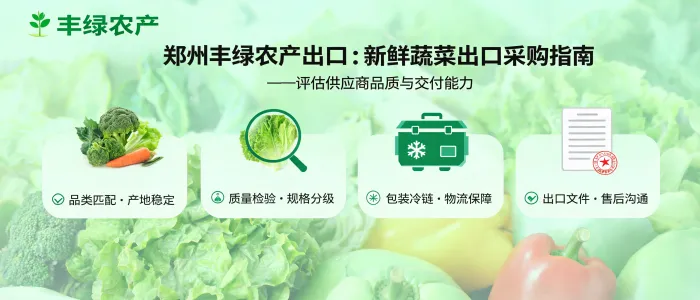
Zhengzhou Fenglu Agricultural Export Co., Ltd.
vegetable export procurement
agricultural supplier assessment
export quality standards
supply stability
146
|
Zhengzhou Fenglu Agricultural Export Co., Ltd.
vegetable export procurement
agricultural supplier assessment
export quality standards
supply stability
 382
|
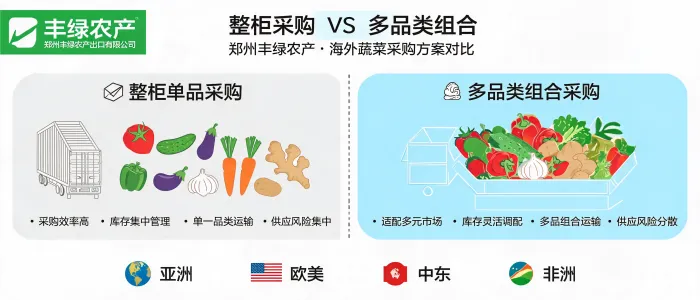
Zhengzhou Fenglu Agricultural Export
mixed vegetable procurement
full-container vegetable sourcing
multi-product export solutions
382
|
Zhengzhou Fenglu Agricultural Export
mixed vegetable procurement
full-container vegetable sourcing
multi-product export solutions